Baixa and Chiado
Begin with the central grid, public squares, bookshops, and streets that climb toward Chiado. It is a useful first orientation before moving into smaller neighborhoods.
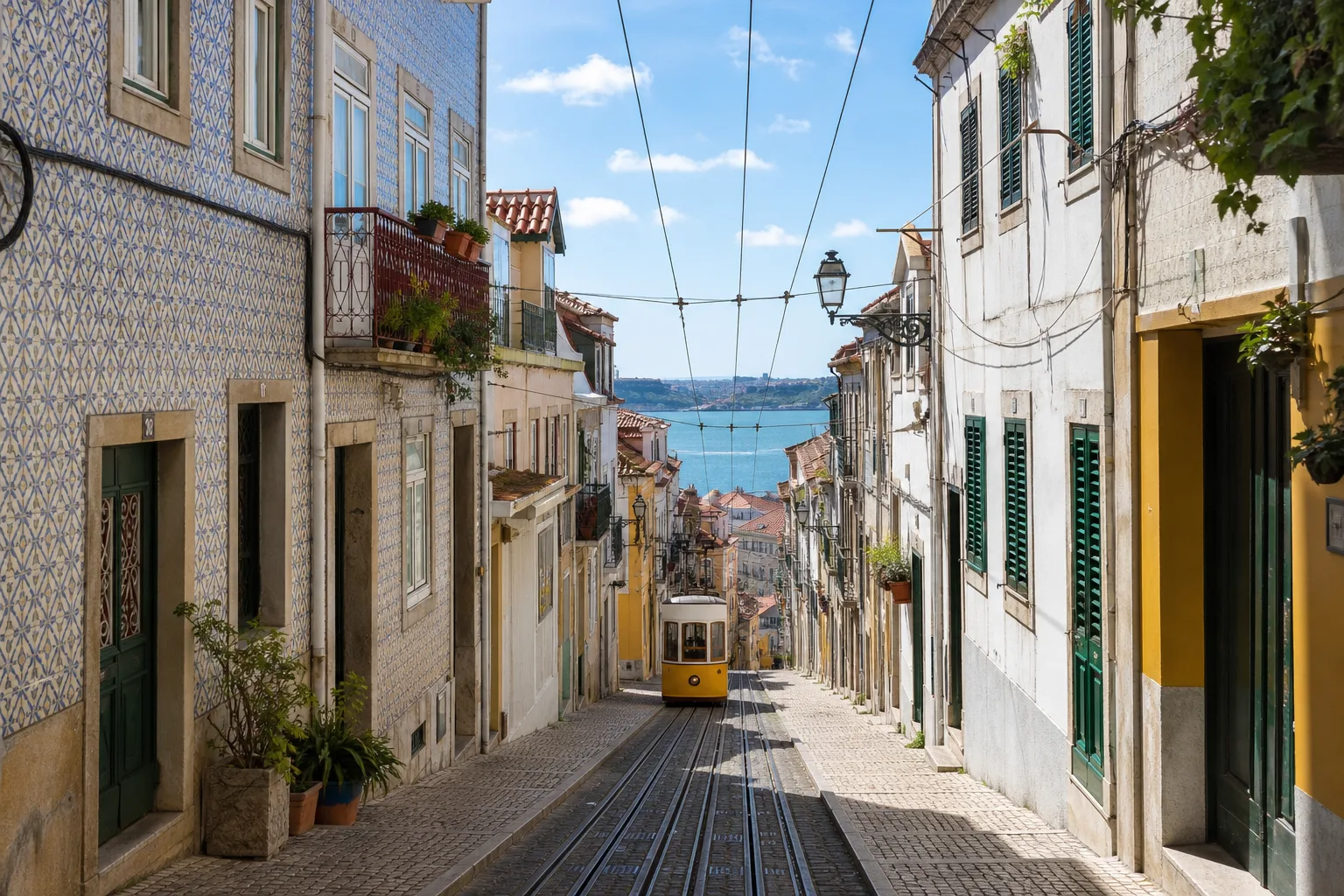
Portugal
Lisbon rewards the traveler who is willing to take the long way downhill.
The shape of the city
Built across steep ground beside the Tagus, Lisbon shifts from tiled residential streets to broad riverfront squares within a short walk. Give the city time for detours: the view at the end of an unplanned lane is often more memorable than the next marked stop.
Areas to explore
Begin with the central grid, public squares, bookshops, and streets that climb toward Chiado. It is a useful first orientation before moving into smaller neighborhoods.
Expect narrow lanes, stairways, laundry lines, and broad viewpoints. Visit early, walk quietly through residential streets, and let the route unfold instead of forcing a rigid sequence.
A riverfront district suited to a slower half-day of gardens, monumental architecture, and waterside walking.
A balanced day
Start early in Alfama, pause above the rooftops, and descend toward the center before lunch. Spend the afternoon along the river or in a museum, then return uphill when the light softens. Wear shoes that handle polished stone and uneven steps.
Food note
Lisbon's everyday pleasures include grilled fish, vegetable soups, small savory plates, espresso at the counter, and bakeries that serve their neighborhood throughout the day.
Continue exploring
Trade Atlantic hills for Kyoto mornings or Mexico City neighborhoods.